🚀Quick Start
- AI Taking away the enjoyment of finding things out
- The last generation of Mathematicians
- 🏆 Goals
- 🏗️ Documentation as Infrastructure
AI Taking away the enjoyment of finding things out
Richard Feynman:
Source: Sophie Maclean
The goal of Mathematicians is as well to build theory around it. A great example he uses is the Alan Turing example that he created a small little lemma to basically disprove Hilberts problem. If he did not create the Turing machine then we would not have had the computers today.
Is a proof still a proof if no human understands it ?
As a current graduate student, I kind of have studied through higher education from the era when AI was essentially useless for math to what we have now. One thing that I've noticed has changed so much in education in the last couple of years is how often I actually study with my peers. During my undergrad, I felt like in most classes that I took there would be people who were really engaged with the material and willing to work through problem sets and have deeper discussions about the math/physics we were working on. However, now I feel like my peers don't want to engage in this kind of discourse because they can get their questions answered with more rigor and efficiency by a model, rather than by learning from their peers. Even the percentage of the class that will go to professors' office hours has seemed to decrease as AI gets better and more accurate at explaining concepts. I do sometimes miss the community of problem-solving, as it seems harder to find these days.
Now Mathematicians are less in the open sharing ideas with their peers, don't post ideas anymore on the internet because they are afraid of their work being taken by some AI model that will then try to solve it to hit some bench marks and get more money invested in their products. Luckily Deternet does not sit in the playing field, since we don't have anything to compete with. If AI companies want to steal our methods! well that is great because that would mean that these companies come in the hands of the people instead of some tech bros and their investors. So you see this is a privilege that only projects have that are nonprofits because you cannot compete with a nonprofit since it cannot go bankrupt in the economics sense
"in so far as there is joy in doing it" hides a lot. The purpose of teaching others (why teach if AI teaches better?), economic purpose (why do it if it makes less money? the art industry is well known for having hypercompetitive hellscape job markets), prestige purpose (why do it if the machine always gets there first? who finds it impressive to learn what is already known?). Reduced purpose is reduced meaning is reduced joy.
The main problem I am having with AIs is that having "problem solving skill" and doing "problem solving" (as a human) is no longer economically efficient. AI excels at problem solving, and the joy I feel in math and programming is the problem solving itself, not the end result
"I want AI to do my laundry and dishes so I can focus on art, not for AI to do my art so I can do my laundry and dishes."
Part of the problem with all these AI impacts on various professions is it raises the floor at which people can start contributing in a way that’s useful, meaning people will either have to spend even more of their life studying, or we have to find whole new pedagogical forms that will increase the speed of learning.
real mathematicians constantly use computers to brute force things and it has always been controversial. when computers started to brute force through unsolved problems in the 60s it was super controversial and everyone said math was dead. many people said there was no possible role a mathematician could have anymore, and would just become a monkey hammering the computer buttons and slowly lose all understanding. many people said that computer results were meaningless because it took no human ingenuity to get us there. (this was in the 60s btw)
We will want to understand the problems AI solved! That is the next frontier of mathematics. Until the moment comes that AI can also explain to mathematicians how they came up with the proof, new methods they used, to make it human understandable. But even then, you need lots of back ground knowledge to understand these higher forms of mathematics. You basically need to study the mathematics from the basics and then work your way upwords i.e calculus - > lineara algebra -> anlysis -> group theory -> topology etcetera.
And on you're analogy I think its like having someone annoying watching a movie and then telling you oh this guy dies at the end. You don't even want to continue cos the life has been sucked out of the experience
The Paradox of Efficiency
Disease treatments without understanding people would be happy with it.
We cheat the
There's so much more being lost. I'm a software developer so I think often my criticisms fall flat because people think I'm just worried about losing my job, but what I'm most worried about is losing the societal glue of having to rely on each other's skillsets since way back in our evolution, both for productivity and for passing that knowledge on. I don't want to live in a world where machines make all the breakthroughs - I want to benefit from the skills of humans who can do something I can't. I want to be able to repay that with my own knowledge. I want to be able to have art on the wall that was drawn by someone with a talent and a passion I lack.
2 years ago I felt the same about computer science. I love the journey to code, find creative solutions and combine modular parts of a system, into a whole product which is working. The last 3 months I just stopped mentally working as computer scientist anymore. I lost my whole fun and enjoyment in it and writing this makes me sad, because I have no clue how to feed my family.
There is a genuine feeling, of self-disappointment and resentment for humanity as a whole, when you realize you dont even need to think any more because we chose to make a machine that takes away all the learning and knowledge steps we had to do ourselves, to evolve as a species. All the little things that actually make you grow in a field. All the misteps and the joy of eventually overcoming them to earn our places
Doubt all you want, that doesn't mean your doubt is founded in reality. A train still runs even if no one understands how it works. Math is still correct even if humans don't understand it. Cures to diseases that AI may find will still work if we don't understand them fully just like anesthesia. Results are the only thing that matter, the rest like human understanding is egotistical.
it is not just maths but all forms of human endeavour where the journey, the process, the reflection, the struggle and creativity are what give meaning - that is where all the value in both art and science lie and maths is a far more creative pursuit than people may realise. Its like seeing som AI art that looks half-decent -raer as they are, but even then, there is no human experience, no process, no connection with the wonder that a human made it - art is just reduced to a background, to knick-knacks and nothing has meaning.
But I think it’s important to focus on the big picture. If OpenAI wanted to destroy the mathematical community, this would be a great way to go about it. Open problems are a resource that the mathematical community developed over decades or even centuries. The value they have is the value we have given them. They provide structure, a yardstick for progress and long-term goals. The advent of AI was always going to be a seismic shock, but this huge dump of papers is a tsunami that we have no time to prepare for. It’s clear that OpenAI will happily wash away our community’s structures to further their financial interests.
There is a long list of mathematical structures and norms that OpenAI seems to be intent on damaging. By refusing to name the authors of their papers, they imply that mathematics is no longer a human endeavour. They don’t submit their results to journals, which both implies that the norms of the mathematical community are defunct and makes it impossible for the community to digest their results. OpenAI haven’t shared fundamental information about how the problems are selected or the failure rates of their attempts. This information should be a necessary requirement for any serious scientific discussion of their tools. And of course there is the basic financial injustice that their hugely valuable models learned to reason by copying the very reasoning that our community made available for free through the Open Access movement.
I hope the mathematical community can adjust our practices and norms quickly enough to survive the shock of these developments, but I am fearful.
The last generation of Mathematicians
Source: The last generation of mathematicians
A proof plays a role
People that write proofs don't even understand all of the steps themselves. That is to say that they are building on the shoulders of other giants with theorems, lemmas and conjectures that others have proven. The mathematician that is proving a new theorem is using these already proven theorems in their toolbox as steps in their own proofs. However, that does not mean that this mathematician can reproduce the proofs of the existing theorems they are using for proof their own proofs ;)
He believes that in the future there will be a dedicated set of servers that will constantly do math, others do biology etcetera. Then we wil be there to witness it and new university will become to understand all of it.
Assimov: Future humanity is astonished to discover a man who can do basic arithmetic without the computers.
Math is only limited by what makes sense, and all other fields are limited to the real world. Hence, it is the field in which you could possibly be the most creative and create the hardest problems. Now, limitations of the real world could also make things harder if you need to work
Some mathematicians joke about physics in the following way. If you ask a mathematician and a physicist to calculate the volume of a cow then how would they go about it. The physicist would say: Assume the cow is a sphere ;)
One way of knowing a theory is successful is when the rigor outgrows the intuition. Once, you have your intuition on how about going about something
🏆 Goals
Welcome to the 🏠HomeLab Instance of the 📘Deternet Bookstack Collection !
This instance aims to achieve the following goals:
- Provide instructions on how to setup a basic open source HomeLab for the every day user.
- Provide a layman to setup a Home Network, Home Server, and Maintenance & Backup configuration
- Provide advice one what works best in which situations, budget, and redundancy levels
- Provide Links to Video Content on associated PeerTube channels for each step
The Team i.e a group of global volunteers (which could be you) is constantly trying to update this instance to the latest standards and recommendations.
The goal of the Deternet Bookstack instances is to create a collaborative authoritative truth for various topics that make a global digital commons for the average man a reality. It is not a detailed comprehensive guide nor a course to get into the nitty gritty of all the complexity of a digital commons. The goal for these instances to be starting points, guides, get the layman started in no time and interested in any of the sectors of a digital commons.
Now, people will either access this documentation directly or indirectly, where directly means literally by reading it in a human form and indirectly is via AI agents.
🏗️ Documentation as Infrastructure
Now, Deternet focuses on how we can move towards a collaborative world as quickly as possible, main through human efforts. However, we must accept the fact that at some moment robots will be able to lay cables in the ground, dig, do installations etcetera. However, the goal is that all these technologies will be created and maintaind by local communities and that we as the world collaborate and can decide what happens with our futures. So yet Deternet's goal will always be to keep the community in control of resources and infrastructure as long as that will last. Even if AI will be able to do the physical work as well, and do the planning then we still would like the community to understand what they are doing,why they are doing things, not just that they do.
So please join us on our journey to make this world collaborative instead of competitive by setting up a global digital commons that eventually will affect any other industry in this world. We hope that this concept can then adjust to all other fields then tech as well by already providing the nonprofits with free digital resources to maintain their nonprofit goals as well.
But yeah, we think that eventually any sector should get a central global shared space, like the world's scientific community where people share their ideas and findings, like in an open source fashion such that others can build upon it. The tools that we use at Deternet will be the perfect starting points for that as well.
This is mainly where the nonprofit section is focused on and we hope that the industries represented there setup their own communities as well with their own websites and local hubs to get things done in their community.
Finally, for education we want to setup tinybrains that is basically the focus of the future of education i.e using AI tools to learn and teach but have local physical and online hubs where people can discuss their findings, inspire each other, organize events, competitions.
Explain How we used to study and learn
seminars, you went there to tutorials, lectures, your friends house to study whiteboards
Then give quora, stackexchange examples
give the example of chegg and how it crashed when people could get it for free
Now, AI tutors are the future of learning people knowledge
What is valuable is the human connection, sharing it with others.
people don't go to websites anymore only stay in their ai interface
phone companies now rolling out AI native operating systems and give examples
Different ways of accessing this content. If you actually want to study it and understand or if you just want to get something fixed quick.
Grokipedia is another example of AI generated content from the web.
Grokipedia; We are talking about poisoning the well that future AI's drink from. Then it will only get worse and worse and worse. Especially on articles that are subjective in nature which is almost any article except science and math. Every new tool that gets trained on these new AI generated content will be trained on these biases from the AI's before them.
It is a place where speed and mass replace accuracy and human judgement
Very soon, if not already the case, content written by AI frontier models will be more reliable than any human. We are getting to the point where it is like having a 5th grader (human) review the work of a college professor (ai).
-----> Consequence: We will always have human curated content, just for the fact that even if AI becomes more intelligent than us we still need to understand it from our human point of view. If we cannot comprehend it then science for humans is basically lost. Therefore, unless we merge with AI (which is highly unlikely) than we will continue our path on human documentation both for curiosity and safety.
Most of american llm's are trained on Wikipedia because it is data that is human curated. It is not perfect but it gets the closest to a general truth without being to biased.
With the advent of AI and especially LLM's it has become clear that education and the way we absorb information will never be the same again. Not that education has not changed overtime, but all content before LLM's and AI was written and curated by humans regardless if it was digital or not. With
It is crucial that all AI generated content is fact checked manually by humans. That is what we try to do here as well. If you add content no matter AI generated or not it will be fact checked by the community to make sure that hallucinations do not enter the documentation pages.
The way we absorb information and the way we educate people has always changed over time, but something drastically changed since the advent
Richard Feynman and Ablert Einstein clearly understood that you only understand something if you can eplain it to a 14 year old.
Well LLM's and AI agents could obviously behave both ways, they could teach but they could also pretend to be 14 year old.
Hence, the LLM can also actually test on different levels if you understand the content or not.
However, what is important in all of this is the trainings data! if the trainings data is incorrect then also teaching will be incorrect.
ChatGPT, Claude, AI overview
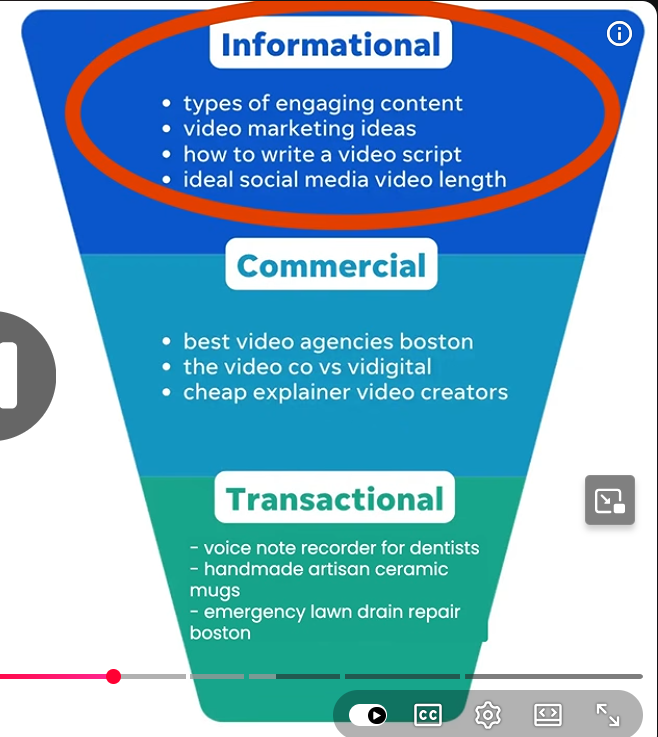
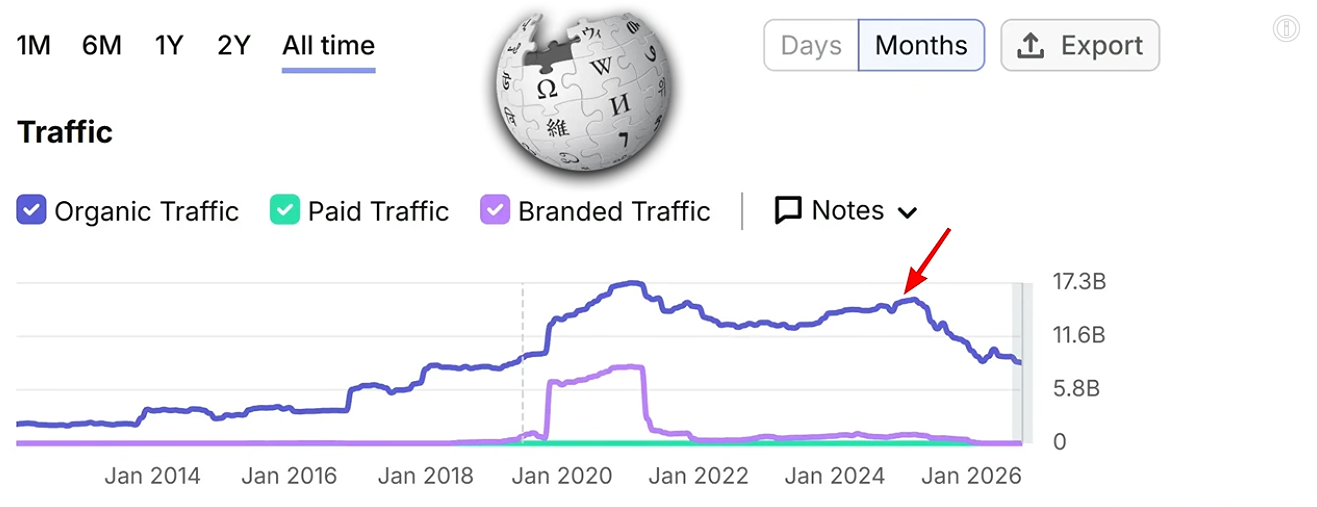
go to the actual forums, websites, documentation pages than ever before. The reason is quite simple and it is called drum roll 🥁, surprise surprise Large Language Models and AI Agents 🤖. These systems have been trained on the whole internet including all the tutorial websites or any website you always used in the past.
Before, this boom most people would go to the knowledge forums like Quora, Stack exchange, Reddit, Documentation pages and Blogs about basically anything. Yes, people also copied other websites and then made sure to end up on the top of search engine to earn money through ads ;). But for most of it, humans would visit websites for information, knowledge and studying.
Today, that turned on its head and most people are almost never leaving their LLM/AI agent user interface unless they are actually studying a subject or want to build something that takes a bit more effort than just clicking through some settings of a well known device or app.
In 2023, online gig workers were estimated to number between 154 million and 435 million globally. As such, they could represent as much as 12.5% of the global labour force.
Today, however, many people do something else. They open ChatGPT. Generative AI now acts as a copy editor, translator, illustrator and research assistant in one. It can summarise a report in seconds, write social media posts, create a presentation or produce a simple logo at virtually no cost.
What, then, has happened to the freelancers who used to do this work?
AI has long been discussed as a threat to jobs and livelihoods. But what’s the reality? In this series, we explore the impact it is already having on different occupations – and how people really feel about their AI assistants.
Some freelancers are struggling. But perhaps surprisingly, others are doing better than ever.
Demand and wages have fallen for some kinds of online freelance work. Translation, basic copywriting and simple graphic design have been hardest hit. According to one study, demand for freelance writers was found to have fallen by up to 30% after the release of generative AI tools. Other research suggests that freelancers who are highly exposed to AI saw earnings fall by as much as 14%.
Yet there is also evidence that many freelancers are thriving. Freelancer platform Upwork reports that higher-value contracts – those worth more than US$1,000 (£745) – increased across various disciplines after the arrival of generative AI. Freelancers using AI-related skills earn around 40% more than comparable freelancers who do not.
How can both of these things be true? The answer becomes clearer when you stop thinking about “freelancers” as one group and instead look at the tasks and skills they perform.
Some kinds of freelance work are highly commodified. They consist of narrowly defined, repetitive tasks that can be clearly described and easily compared. This could be things like translating a document, summarising a report, drafting a press release or designing a basic logo.
These tasks are exactly what generative AI is good at. They rely on patterns, templates and predictable instructions. The more closely a freelancer’s work resembles the tasks that AI can perform, the more likely it is to come under pressure.
But other freelancers do not sell a single narrow skill. They sell a more complex bundle of expertise. A legal translator does not merely convert words from one language to another. They understand legal terminology, cultural nuance and the risks of getting a phrase wrong.
Similarly, a branding consultant combines design with market research and consumer psychology. A software developer may use AI to generate code, but still needs to understand the client’s business problem to decide which solution actually works.
These workers can use AI to automate the repetitive parts of their jobs while concentrating on the aspects that clients still value most: expertise, judgment and trust.
Recent evidence from the US labour market suggests that younger and less-experienced workers are already bearing the brunt of AI-related disruption. Senior workers, by contrast, tend to do more complex work, combining technical knowledge with experience and human interaction. ---> Juniors cannot learn on the job since that already can be done by AI. They want to hire directly seniors that can correct the AI output and do more complex tasks. So, what they can do is let juniors have AI tutors to train them for free until they are ready for the job to become an AI Slop Cleaner ;)
So all these documentation instances are really for people that are interested in the subject. It won't be for people that just want their home server up and running and install apps.
For the ecosystem, the implications are murkier. LLMs were trained on Stack Overflow's corpus. If the site continues declining, where will future training data come from? Who will catch and correct the errors that LLMs confidently present?
The question isn't whether AI will displace these platforms. The question is what comes next - how we'll generate, verify, and maintain the knowledge that future AI systems will need to stay accurate.