
🏗️ Documentation as Infrastructure
Explain How we used to study and learn
seminars, you went there to tutorials, lectures, your friends house to study whiteboards
Then give quora, stackexchange examples
give the example of chegg and how it crashed when people could get it for free
Now, AI tutors are the future of learning people knowledge
What is valuable is the human connection, sharing it with others.
people don't go to websites anymore only stay in their ai interface
phone companies now rolling out AI native operating systems and give examples
Different ways of accessing this content. If you actually want to study it and understand or if you just want to get something fixed quick.
Grokipedia is another example of AI generated content from the web.
Grokipedia; We are talking about poisoning the well that future AI's drink from. Then it will only get worse and worse and worse. Especially on articles that are subjective in nature which is almost any article except science and math. Every new tool that gets trained on these new AI generated content will be trained on these biases from the AI's before them.
It is a place where speed and mass replace accuracy and human judgement
Very soon, if not already the case, content written by AI frontier models will be more reliable than any human. We are getting to the point where it is like having a 5th grader (human) review the work of a college professor (ai).
-----> Consequence: We will always have human curated content, just for the fact that even if AI becomes more intelligent than us we still need to understand it from our human point of view. If we cannot comprehend it then science for humans is basically lost. Therefore, unless we merge with AI (which is highly unlikely) than we will continue our path on human documentation both for curiosity and safety.
Most of american llm's are trained on Wikipedia because it is data that is human curated. It is not perfect but it gets the closest to a general truth without being to biased.
With the advent of AI and especially LLM's it has become clear that education and the way we absorb information will never be the same again. Not that education has not changed overtime, but all content before LLM's and AI was written and curated by humans regardless if it was digital or not. With
It is crucial that all AI generated content is fact checked manually by humans. That is what we try to do here as well. If you add content no matter AI generated or not it will be fact checked by the community to make sure that hallucinations do not enter the documentation pages.
The way we absorb information and the way we educate people has always changed over time, but something drastically changed since the advent
Richard Feynman and Ablert Einstein clearly understood that you only understand something if you can eplain it to a 14 year old.
Well LLM's and AI agents could obviously behave both ways, they could teach but they could also pretend to be 14 year old.
Hence, the LLM can also actually test on different levels if you understand the content or not.
However, what is important in all of this is the trainings data! if the trainings data is incorrect then also teaching will be incorrect.
ChatGPT, Claude, AI overview
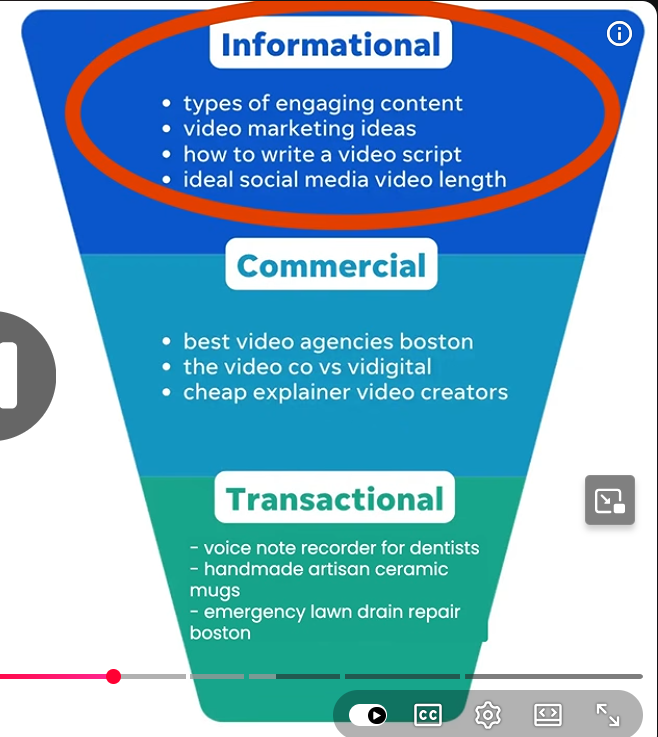
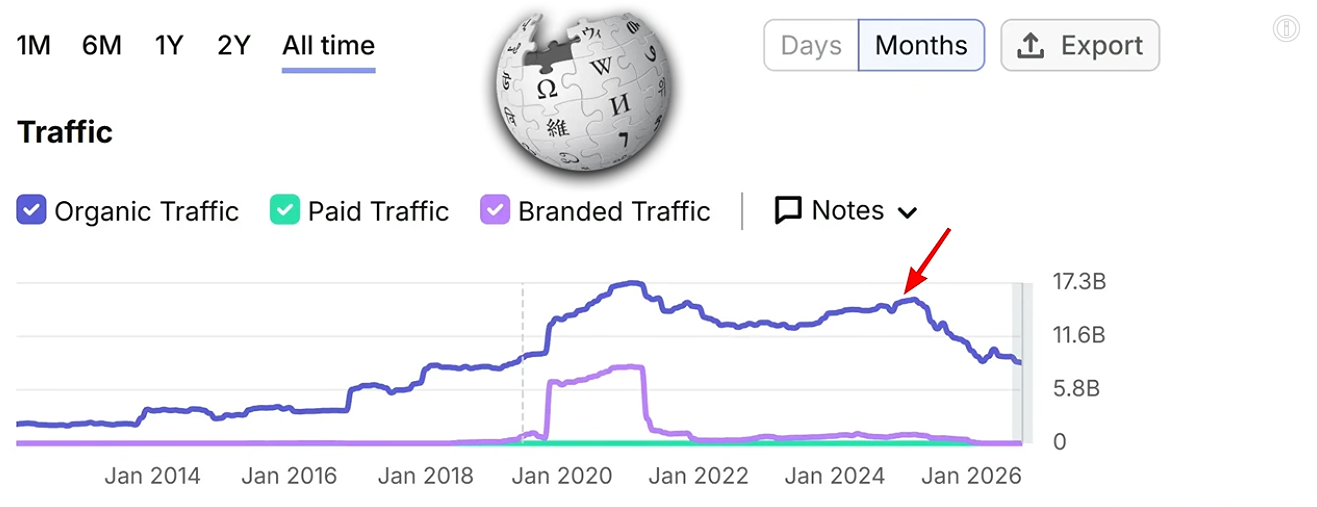
go to the actual forums, websites, documentation pages than ever before. The reason is quite simple and it is called drum roll 🥁, surprise surprise Large Language Models and AI Agents 🤖. These systems have been trained on the whole internet including all the tutorial websites or any website you always used in the past.
Before, this boom most people would go to the knowledge forums like Quora, Stack exchange, Reddit, Documentation pages and Blogs about basically anything. Yes, people also copied other websites and then made sure to end up on the top of search engine to earn money through ads ;). But for most of it, humans would visit websites for information, knowledge and studying.
Today, that turned on its head and most people are almost never leaving their LLM/AI agent user interface unless they are actually studying a subject or want to build something that takes a bit more effort than just clicking through some settings of a well known device or app.
In 2023, online gig workers were estimated to number between 154 million and 435 million globally. As such, they could represent as much as 12.5% of the global labour force.
Today, however, many people do something else. They open ChatGPT. Generative AI now acts as a copy editor, translator, illustrator and research assistant in one. It can summarise a report in seconds, write social media posts, create a presentation or produce a simple logo at virtually no cost.
What, then, has happened to the freelancers who used to do this work?

AI has long been discussed as a threat to jobs and livelihoods. But what’s the reality? In this series, we explore the impact it is already having on different occupations – and how people really feel about their AI assistants.
Some freelancers are struggling. But perhaps surprisingly, others are doing better than ever.
Demand and wages have fallen for some kinds of online freelance work. Translation, basic copywriting and simple graphic design have been hardest hit. According to one study, demand for freelance writers was found to have fallen by up to 30% after the release of generative AI tools. Other research suggests that freelancers who are highly exposed to AI saw earnings fall by as much as 14%.
Yet there is also evidence that many freelancers are thriving. Freelancer platform Upwork reports that higher-value contracts – those worth more than US$1,000 (£745) – increased across various disciplines after the arrival of generative AI. Freelancers using AI-related skills earn around 40% more than comparable freelancers who do not.
How can both of these things be true? The answer becomes clearer when you stop thinking about “freelancers” as one group and instead look at the tasks and skills they perform.
Some kinds of freelance work are highly commodified. They consist of narrowly defined, repetitive tasks that can be clearly described and easily compared. This could be things like translating a document, summarising a report, drafting a press release or designing a basic logo.
These tasks are exactly what generative AI is good at. They rely on patterns, templates and predictable instructions. The more closely a freelancer’s work resembles the tasks that AI can perform, the more likely it is to come under pressure.
But other freelancers do not sell a single narrow skill. They sell a more complex bundle of expertise. A legal translator does not merely convert words from one language to another. They understand legal terminology, cultural nuance and the risks of getting a phrase wrong.
Similarly, a branding consultant combines design with market research and consumer psychology. A software developer may use AI to generate code, but still needs to understand the client’s business problem to decide which solution actually works.
These workers can use AI to automate the repetitive parts of their jobs while concentrating on the aspects that clients still value most: expertise, judgment and trust.
Recent evidence from the US labour market suggests that younger and less-experienced workers are already bearing the brunt of AI-related disruption. Senior workers, by contrast, tend to do more complex work, combining technical knowledge with experience and human interaction. ---> Juniors cannot learn on the job since that already can be done by AI. They want to hire directly seniors that can correct the AI output and do more complex tasks. So, what they can do is let juniors have AI tutors to train them for free until they are ready for the job to become an AI Slop Cleaner ;)
So all these documentation instances are really for people that are interested in the subject. It won't be for people that just want their home server up and running and install apps.
For the ecosystem, the implications are murkier. LLMs were trained on Stack Overflow's corpus. If the site continues declining, where will future training data come from? Who will catch and correct the errors that LLMs confidently present?
The question isn't whether AI will displace these platforms. The question is what comes next - how we'll generate, verify, and maintain the knowledge that future AI systems will need to stay accurate.